Organic Ecosystem

Organic
Food For
Better Health

Enter the gardening ecosystem. Cultivate a new Gardening Awareness mindset: organic gardening, better health & savings.

Start Growing

Get month by month guidance  →

$0+Average annual savings
More nutrients than store produce
0+Happy gardeners
Getting Started Health Benefits Ways to Save How to Garden Problems & Solutions Organic vs Chemical Buy Better Plants Newsletter Smart Gardeners

Learn, Grow, Save, Health
GardenTeach

GardeningAwareness brings you everything you need to start gardening with confidence — from foundational knowledge to money-saving strategies, we cover all four pillars that make gardening work.

The Philosophy

Return to the soil.

Gardening is more than a hobby — it's a return to our roots. When you work with the earth, you reconnect with nature's rhythms and discover the profound satisfaction of nurturing life from seed to harvest.

"For bigger blooms, bigger garden harvest, use month by month guidance."

Why It Matters

Health Benefits

Beyond fresh produce, gardening transforms your physical and mental wellbeing. It's a holistic practice that nourishes body, mind, and spirit.

  • 🥦

    Nutrient-Rich Food

    Homegrown produce contains higher vitamin and mineral content than store-bought alternatives harvested weeks prior.

  • 💪

    Physical Activity

    Digging, planting, and weeding provide low-impact exercise that improves flexibility, strength, and cardiovascular health.

  • 🧠

    Mental Wellbeing

    Time spent in nature reduces cortisol levels. Gardening has been shown to alleviate anxiety and depression symptoms.

  • 🥗

    Healthier Eating

    Gardeners eat more vegetables. When you grow your own food, you naturally incorporate more fresh produce into meals.
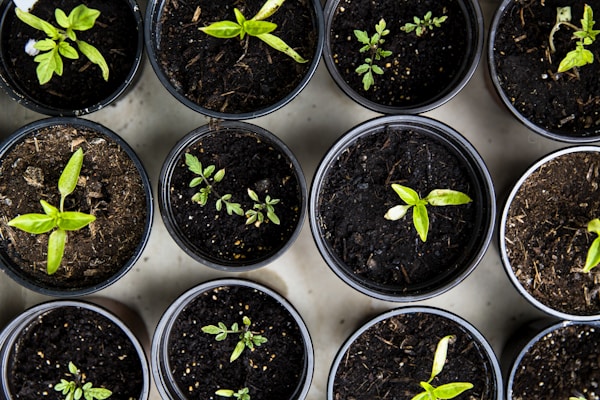
Hands in rich soil with seedlings
Smart Economics

How to Save

Gardening isn't just rewarding — it's economical. Discover how growing your own food can significantly reduce household expenses.

📅
Year-Round

Preserve Your Harvest

Learn canning, freezing, and drying techniques to keep your garden's bounty year-round.

🌱
Free Seeds

Save Seeds

Harvest seeds from your best plants for next season. One tomato can yield enough seeds for years.

📈
3× Value

Grow High-Value Crops

Focus on expensive produce like cherry tomatoes, fresh herbs, and salad greens for maximum savings.

Saved over $1,200 last summer — and the tomatoes are incredible· My anxiety has dropped since I started gardening every morning· The kids actually eat vegetables now that they grew them themselves· First-time gardener — the guides made it so simple· My herb garden paid for itself in the first month· Saved over $1,200 last summer — and the tomatoes are incredible· My anxiety has dropped since I started gardening every morning· The kids actually eat vegetables now that they grew them themselves· First-time gardener — the guides made it so simple· My herb garden paid for itself in the first month·
Grow With Confidence

How to Garden

☀️

Sunlight Matters

Most vegetables need 6–8 hours of direct sunlight. Observe your space throughout the day before planting.

💧

Water Wisely

Water deeply but infrequently to encourage deep root growth. Early morning watering reduces evaporation.

🌿

Companion Planting

Pair compatible plants like tomatoes and basil to naturally deter pests and improve yields.

♻️

Compost Everything

Turn kitchen scraps into garden gold. Compost enriches soil structure and provides slow-release nutrients.

🐝

Beneficial Insects

Welcome ladybugs, bees, and lacewings. Cultivate flowers and control harmful pests naturally.

📆

Succession Planting

Stagger plantings every 2–3 weeks for continuous harvest throughout the growing season.

Common Gardening Challenges

Problems Solved. Gardens Thriving.

Every gardener hits walls. Here's how to break through them — organically, sustainably, and for good.

⭐ Most Important Read

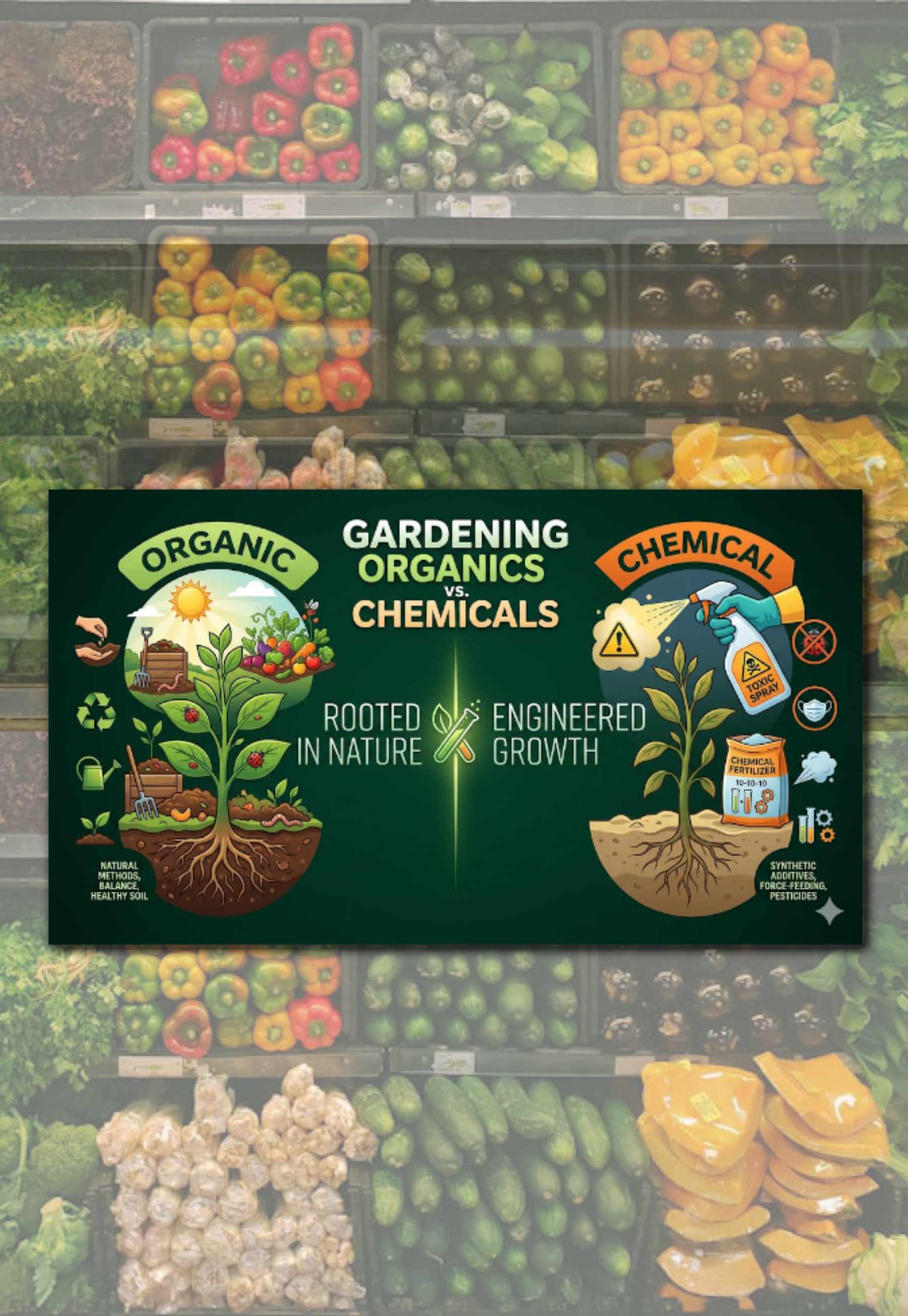
Chemical vs Organic Food:
What You're Really Eating

⚠ The Problem

Conventionally grown produce carries pesticide residues, synthetic nitrates, and soil-depleting chemicals that accumulate in your body over years — often invisible, always present.

✓ The Solution

Growing organically at home eliminates chemical exposure at the source. You control every input — and your soil, your food, and your health improve season after season.

Chemicals vs Organics - Read the full guide  → 101 Gardening Solutions the full list  →
Chemical vs Organic Food
Plant Health

Diagnose & Fix Common Plant Problems

Yellow leaves
ProblemSolution

Yellow Leaves, Green Fix

Problem: Yellowing leaves signal distress — it could be overwatering, nitrogen deficiency, pH imbalance, or root rot quietly killing your plant from below.

Solution: Check soil moisture first. If soggy, let it dry out. For pale yellowing on older leaves, apply a balanced organic fertiliser. Test soil pH — most vegetables need 6.0–7.0 for proper nutrient uptake.

Read more →
Pest control
ProblemSolution

Beat the Bugs Naturally

Problem: Aphids, whitefly, spider mites, and caterpillars can devastate a crop in days. Chemical sprays kill beneficial insects alongside the pests — creating a worse problem next season.

Solution: Introduce ladybugs and lacewings. Use neem oil spray (1 tsp per litre) weekly. Plant companion deterrents like marigolds and basil. A diverse garden is a self-defending garden.

Read more →
Weeds
ProblemSolution

Weeds Won't Win

Problem: Weeds compete aggressively for water, nutrients, and light — and each one that goes to seed means thousands more next year. Hand-pulling alone is a losing battle.

Solution: Mulch 3–4 inches deep with straw or wood chips — weed germination drops by 80%. Hoe shallowly on dry days. No-dig beds suppress weed seeds permanently by denying them light.

Read more →
Water, Air & Earth

Soil, Water & Climate Challenges

Watering garden
ProblemSolution

Dry Spell? Watering Smarter

Problem: Inconsistent watering causes blossom end rot in tomatoes, bolting in lettuce, and split roots in carrots.

Solution: Water deeply every 2–3 days rather than lightly every day. Use drip irrigation or soaker hoses at root level. Mulch retains up to 70% more soil moisture.

Read more →
Mold and mildew
ProblemSolution

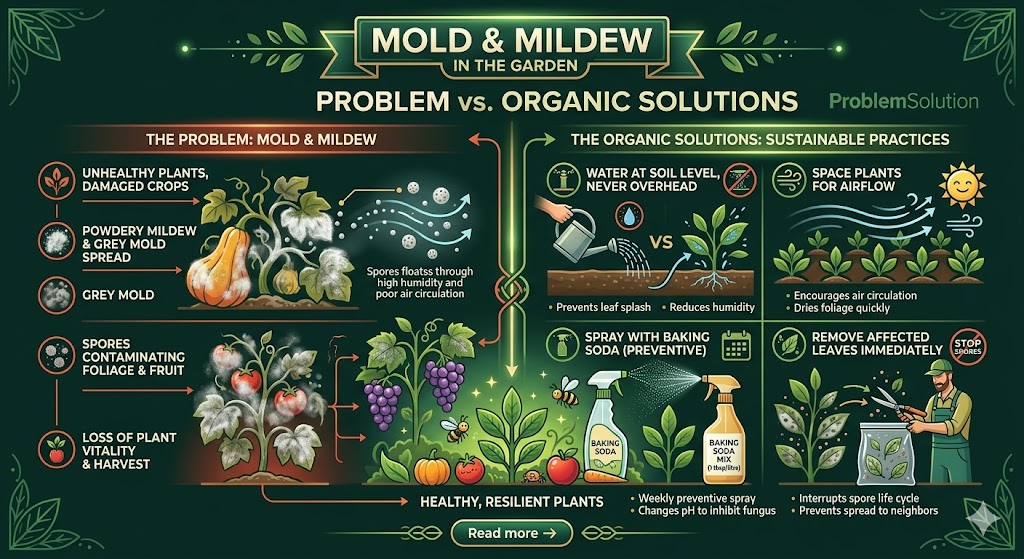
Mold & Mildew

Problem: Powdery mildew, botrytis, and downy mildew spread rapidly in humid conditions.

Solution: Water at soil level, never overhead. Space plants for airflow. Spray with diluted baking soda (1 tbsp per litre) weekly as a preventive.

Read more →
Rich vs poor soil
ProblemSolution

Rich vs Poor Soil

Problem: Compacted, sandy, or clay-heavy soil drains poorly, lacks nutrients, and suffocates roots.

Solution: Add 4–6 inches of compost annually. Never compact soil by walking on beds. Grow green manures over winter to fix nitrogen and improve structure.

Read more →
Space, Access & Germination

Small Spaces, Big Results

Vertical gardening
ProblemSolution

No Space? Go Vertical

Problem: Limited ground space means fewer plants, less yield, and the feeling that a productive garden simply isn't possible.

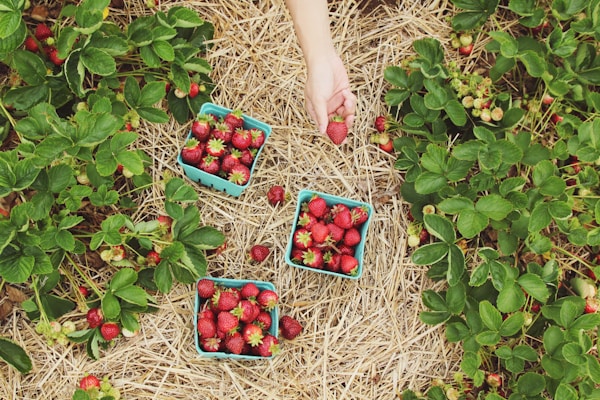
Solution: Train cucumbers, beans, and squash up trellises. Stack planters for herbs. Wall-mounted pockets grow strawberries and salad greens vertically.

Read more →
Animals raiding garden
ProblemSolution

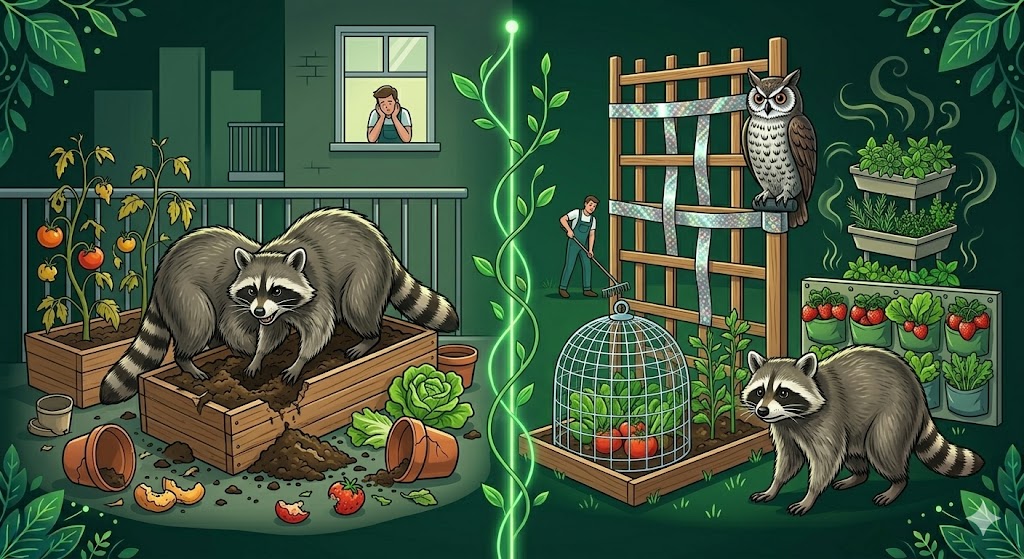
Animals Raiding the Garden?

Problem: Rabbits, deer, squirrels, and birds can destroy an entire planting overnight.

Solution: Use physical barriers — fine mesh netting over beds, chicken wire sunk 6 inches into soil for rabbits, motion-activated sprinklers for deer.

Read more →
Leggy seedlings
ProblemSolution

Leggy Seedlings? More Light.

Problem: Spindly, stretched seedlings that flop over are caused by insufficient light.

Solution: Place seedlings within 2 inches of a grow light, or on your sunniest south-facing windowsill. Rotate trays daily.

Read more →
Seeds, Fruit & Feeding

From Seed to Harvest

Seed starting mix
ProblemSolution

Synthetic vs Organic Seed Mix?

Problem: Synthetic seed starting mixes are stripped of life — no beneficial microbes, no long-term nutrition.

Solution: Use an organic seed-starting mix with worm castings and coir. It retains moisture, contains gentle starter nutrients, and introduces beneficial microbes from day one.

Read more →
Cracked tomatoes
ProblemSolution

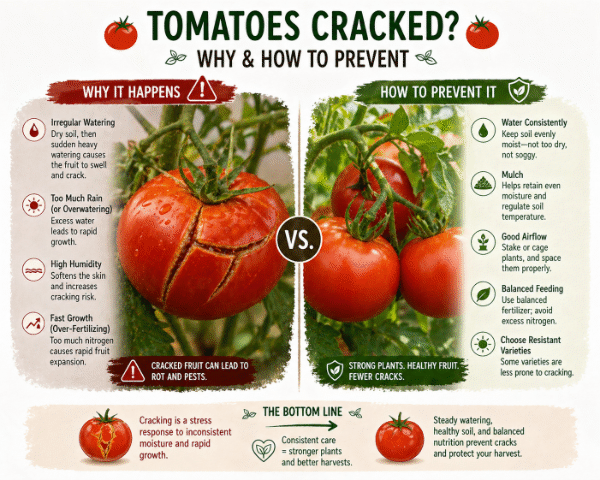
Tomatoes Cracked? Here's Why.

Problem: Tomatoes crack when they receive heavy rain after a dry period — ruining the harvest just before picking.

Solution: Maintain consistent soil moisture with mulch and regular irrigation. Harvest tomatoes at first blush of colour — they ripen off the vine perfectly and crack-free.

Read more →
Composting
ProblemSolution

Feed Soil, Not Just Plants: Composting 101

Problem: Synthetic fertilisers create short-term growth while bypassing the soil food web entirely — the soil degrades each year.

Solution: Build living soil by composting kitchen scraps, garden waste, and cardboard. Apply 2–4 inches of finished compost annually.

Read more →
Control, Balance & Long-Term Health

Natural Solutions vs Chemical Shortcuts

Pest balance
ProblemSolution

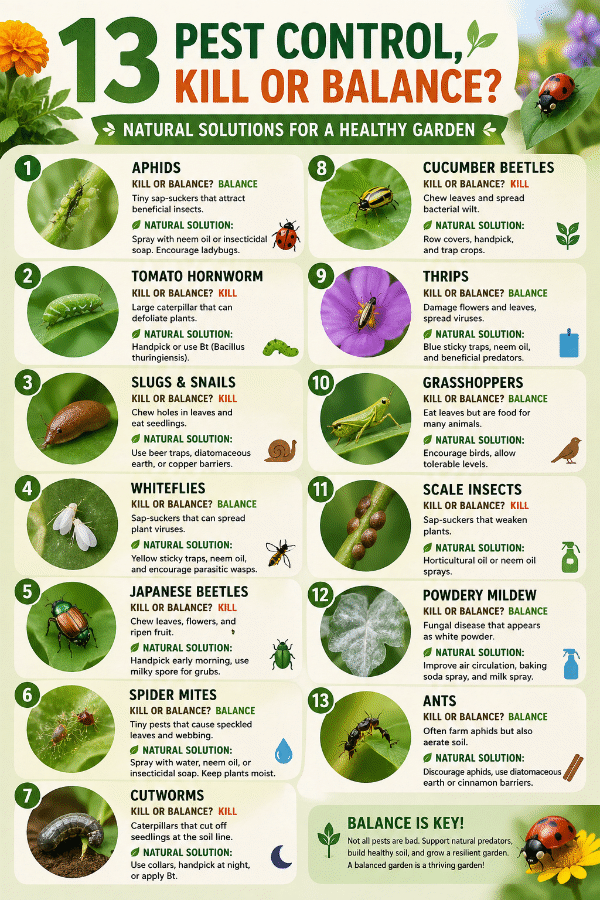
Pest Control: Kill or Balance?

Problem: Chemical pesticides kill indiscriminately — wiping out the beneficial predator insects that naturally regulate pests.

Solution: Aim for ecological balance. Attract hoverflies, ground beetles, and parasitic wasps with flowering plants. Intervene only with targeted organic sprays (neem, pyrethrin) when necessary.

Read more →
Weed killers vs mulch
ProblemSolution

Weed Killers vs Mulch: Which Wins?

Problem: Herbicides kill weeds but also disrupt soil microbiota and have been linked to health concerns with repeated exposure.

Solution: A 3–4 inch mulch layer blocks 80% of weed germination, retains moisture, moderates soil temperature, and feeds soil life as it breaks down.

Read more →
Chemical vs organic fertilizers
ProblemSolution

Fast Results vs Long-Term Health: Chemical vs Organic Fertilizers

Problem: Synthetic fertilizers deliver a fast green-up but bypass soil biology entirely — salts accumulate and beneficial fungi die off.

Solution: Organic fertilizers (compost, worm castings, bone meal, seaweed) release nutrients slowly via microbial activity, building long-term soil structure season after season.

Read more →
GardeningAwareness
Full Deep-Dive

Chemical vs Organic Food — The Complete Guide

Our most comprehensive resource: everything you need to know about what's in your food and how to protect your family's health through your garden.

Read the full guide →
Gardeners Beware

Before You Buy Garden Plants — Vegetables & Annuals

Most gardeners spend more than they should — on weak plants that underperform. These guides show you exactly what to look for before you spend a single dollar at the garden center.

Plant Selection Fundamentals

Choose Smarter at the Garden Center

Healthy vegetable seedlings at garden center
Buying Guide

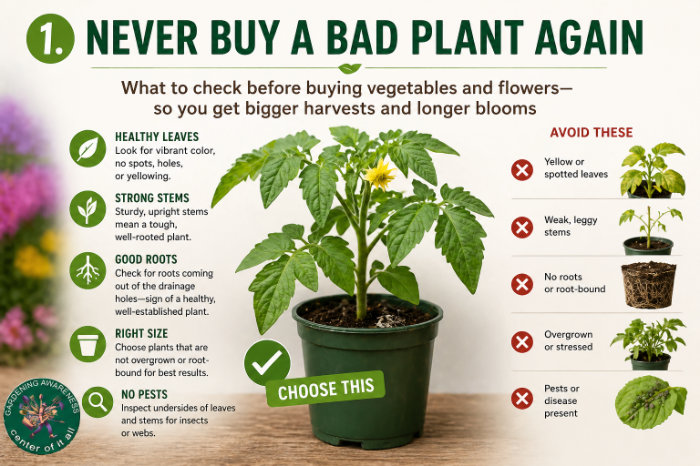
Never Buy a Bad Plant Again

The mistake: Most gardeners pick plants based on looks — bright flowers, lush foliage — without checking the signs that actually predict performance.

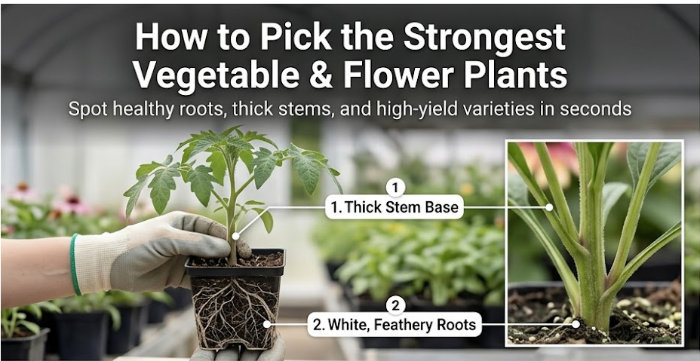
What to check: Inspect roots (white & firm, not brown and matted), stem thickness, and leaf color before buying vegetables and flowers — so you get bigger harvests and longer blooms season after season. See our health benefits guide to understand why plant quality affects your food's nutrition too.

Read more →
Checking plant roots and stem health
Common Traps Checklist

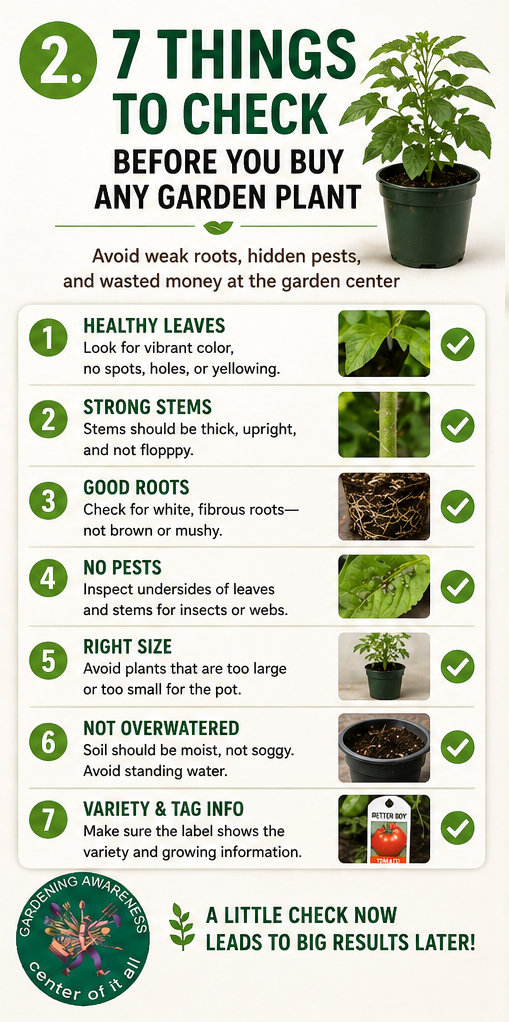
7 Things to Check Before You Buy Any Garden Plant

Problem: Weak roots, hidden pests, pot-bound stems, and stressed soil are impossible to spot without knowing exactly what to look for — and garden centers don't advertise their problems.

Solution: Use this 7-point inspection to avoid weak roots, hidden pests, and wasted money at the garden center every time. Works for vegetables, herbs, and annual flowers. Also see our organic vs chemical guide to choose the right plants grown without synthetic inputs.

Read more →
Inspecting seedling roots before purchase
Quick Checklist

Don't Buy That Plant Until You See This

The hidden cost: A weak transplant costs the same as a strong one at the register — but it may never recover, delivering half the yield and twice the frustration.

The fix: The simple inspection checklist that saves money and doubles your garden results. Check these 5 visible signals before putting any plant in your cart. Combine this with our how-to-garden tips for the strongest possible start.

Read more →
Variety & Visual Selection

Spot Winners — Avoid the Losers

Thick-stemmed tomato transplants
Overcrowded garden center displays
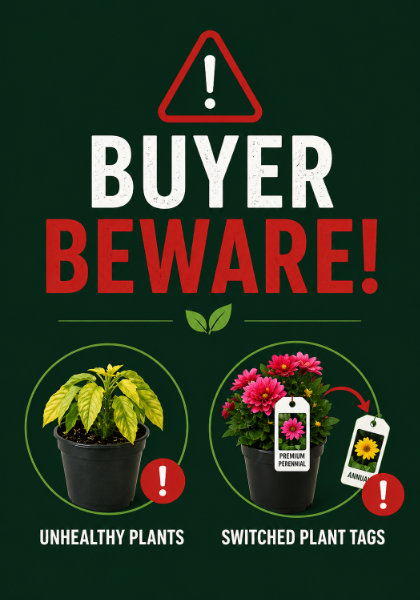
Buyer Beware Strategy

The Garden Center Trap Most People Fall For

The trap: Plants with the brightest blooms and fullest foliage are often the most stressed — forced into early flowering to look attractive on shelves, at the expense of root development.

What to do instead: What looks good isn't always healthy — here's how to choose plants that actually perform all season long. Hint: the best plants often look slightly less impressive on the shelf. Also check our Eastern Market buying guide for a smarter shopping alternative.

Read more →
Abundant vegetable and flower garden harvest
Smart Guide

Buy Better Plants, Get Bigger Results

The frustration: Spending $80 at the garden center and harvesting barely enough to cover one dinner is an all-too-common story — and it's almost always about plant selection, not skill.

The upgrade: A smart gardener's guide to choosing high-yield vegetables and long-lasting blooms. Covers what to buy, when to buy, and which sources to trust. See also how homegrown food multiplies nutritional value over store-bought produce.

Read more →
Speed & Efficiency

Fast Checks, Big Wins

Wilting neglected garden plants
Waste Stopper Fix It

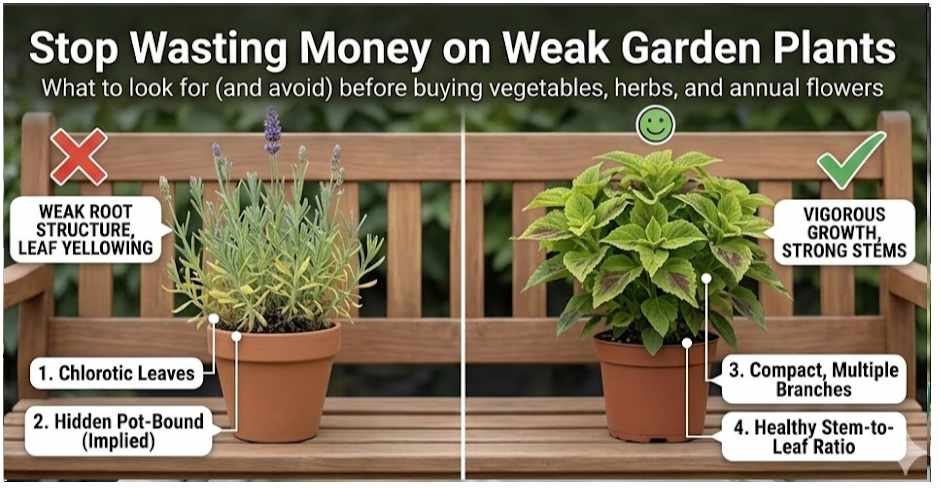
Stop Wasting Money on Weak Garden Plants

The drain: The average gardener buys 20–30% of plants that underperform or fail entirely — often spending $50–$200 per season on plants that never fulfill their potential.

The cure: What to look for (and avoid) before buying vegetables, herbs, and annual flowers. One 5-minute read that pays back every season. Combine with our ways to save guide to keep your total garden budget under control.

Read more →
Quick plant inspection at garden center
Speed Test

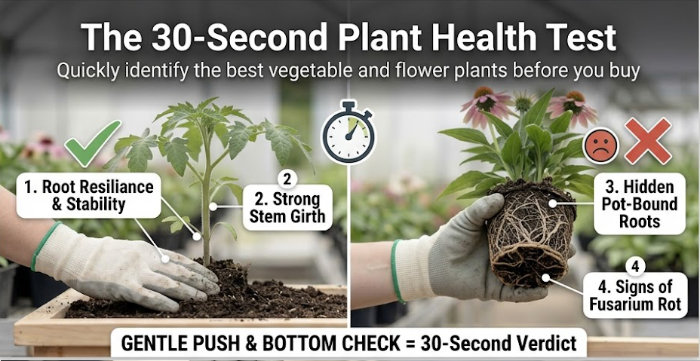
The 30-Second Plant Health Test

The time crunch: Most gardeners don't have time for a deep inspection on every flat of seedlings — so they skip checks entirely and gamble with their garden budget.

The shortcut: Quickly identify the best vegetable and flower plants before you buy with this 3-step rapid assessment. Works standing in the aisle. Pair this speed approach with our detailed style="color:var(--green-neon);">variety selection guide for best results.

Read more →
Lush productive vegetable garden
Insider Tips

How to Spot a High-Yield Plant at Any Garden Center

What you're missing: High-yield varieties and properly hardened transplants share specific physical traits — but no one at the garden center is going to point them out for you.

The insider edge: The insider signs of stronger roots, faster growth, and bigger harvests. These are the same signals professional growers use when sourcing transplants at scale. Also browse our garden tips section for companion planting strategies that multiply your chosen plants' output.

Read more →
🔥 Smart Checklist & Bonus Warnings

The Smart Gardener's Final Word

Gardener selecting plants with checklist
Full Checklist

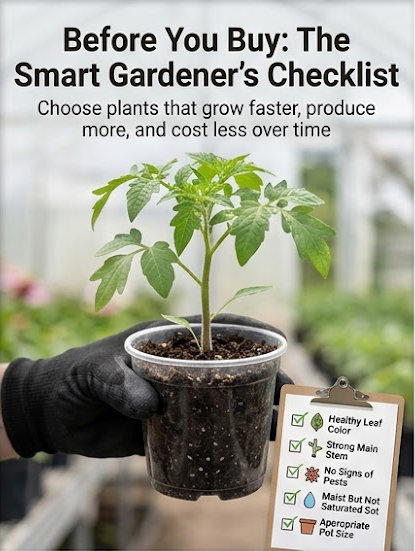
Before You Buy: The Smart Gardener's Checklist

The problem: Buying on impulse — because something looks healthy or is on sale — is the single biggest driver of underperforming gardens, wasted compost, and replanting costs.

The complete resource: Choose plants that grow faster, produce more, and cost less over time. Our printable pre-purchase checklist covers vegetables, annuals, and herbs in one streamlined reference. Also see how smart buying habits connect to broader annual savings of $900+ per gardening season.

Read more →
Overcrowded overstocked garden center shelves
🔥 Bonus Warning

Most Garden Centers Sell You the Wrong Plants

The uncomfortable truth: Large garden centers prioritize shelf appearance and turnover speed over plant health — which means the plants that sell fastest are often the worst performers in your garden.

How to avoid it: Here's how to avoid overpriced, weak plants and pick winners every time — including which types of suppliers consistently produce stronger transplants. See also our style="color:var(--green-mid);">Eastern Market guide for a trusted local alternative in Michigan.

Read more →
Large overgrown pot-bound tomato plant
🔥 Surprising Truth

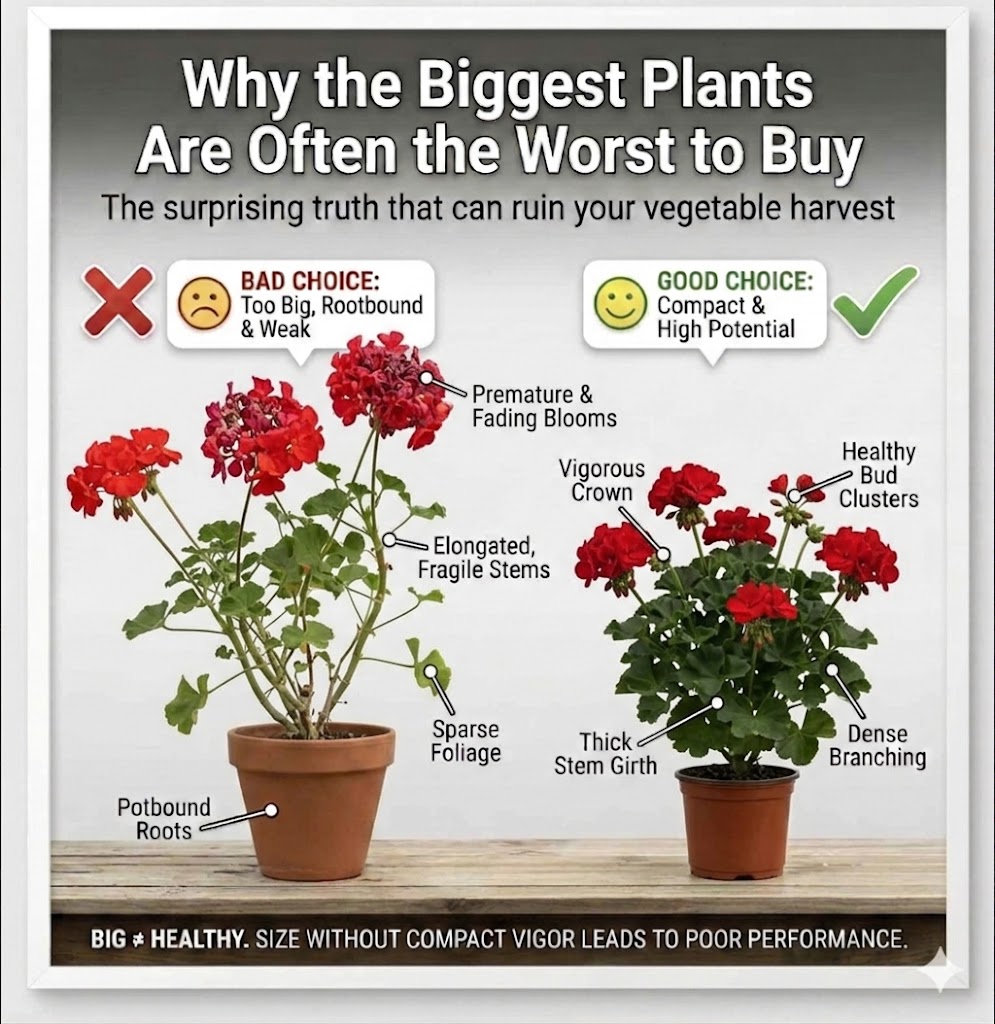
Why the Biggest Plants Are Often the Worst to Buy

The counterintuitive trap: Larger, more developed transplants seem like a head start — but pot-bound root systems, premature flowering, and transplant shock mean they often trail behind smaller, younger plants by midsummer.

What to choose instead: The surprising truth that can ruin your vegetable harvest — and the specific size and stage at which transplants perform best. Understand this alongside our organic growing guide for plants that thrive from root to fruit.

Read more →
Failed garden planting with wilting transplants
🔥 Most Costly Mistake

This One Mistake Costs Gardeners Hundreds Every Year

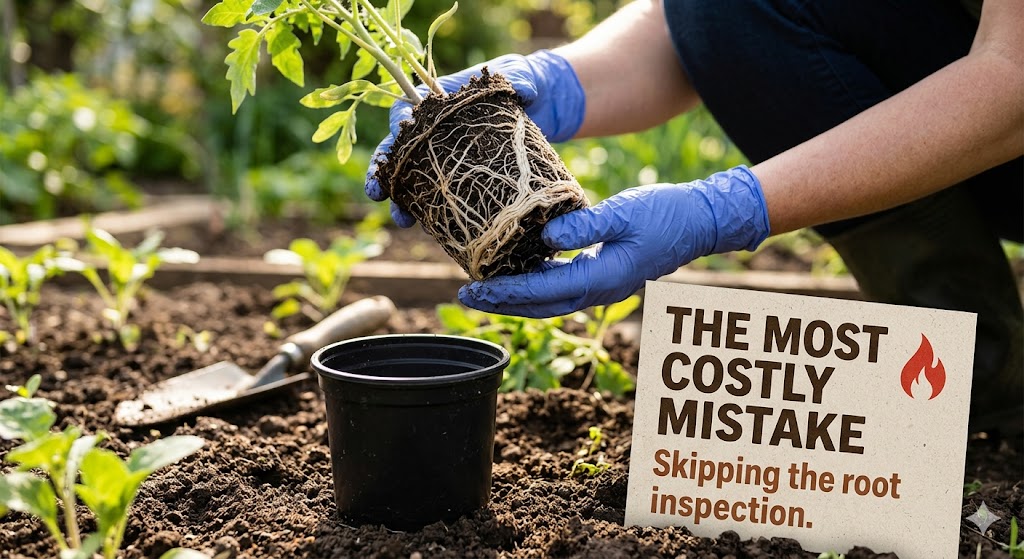
The mistake: Skipping the root inspection. Every year, thousands of gardeners plant pot-bound, root-diseased, or overwatered transplants that never reach their potential — and blame their soil, their location, or their skills instead.

The fix takes 10 seconds: What to check before buying any vegetable or flower plant — and the single most important signal that separates a $4 winner from a $4 waste of space. Pair this knowledge with our how-to-garden guides and organic growing principles for a complete planting system that works season after season.

Read the full breakdown →
GardeningAwareness
Michigan Exclusive

Save $900+ at Eastern Market — Buy Plants the Smart Way

Now that you know what to look for in a healthy plant, put those skills to work at Michigan's best value source. Eastern Market in Detroit offers exceptional quality transplants at a fraction of garden center prices — when you know what to pick.

See the savings guide →
Stay In The Loop

Get seasonal tips, guides
& community updates

Join 12,000+ gardeners getting weekly growing wisdom.

🌱
☀️
💧
🌿
🏡